
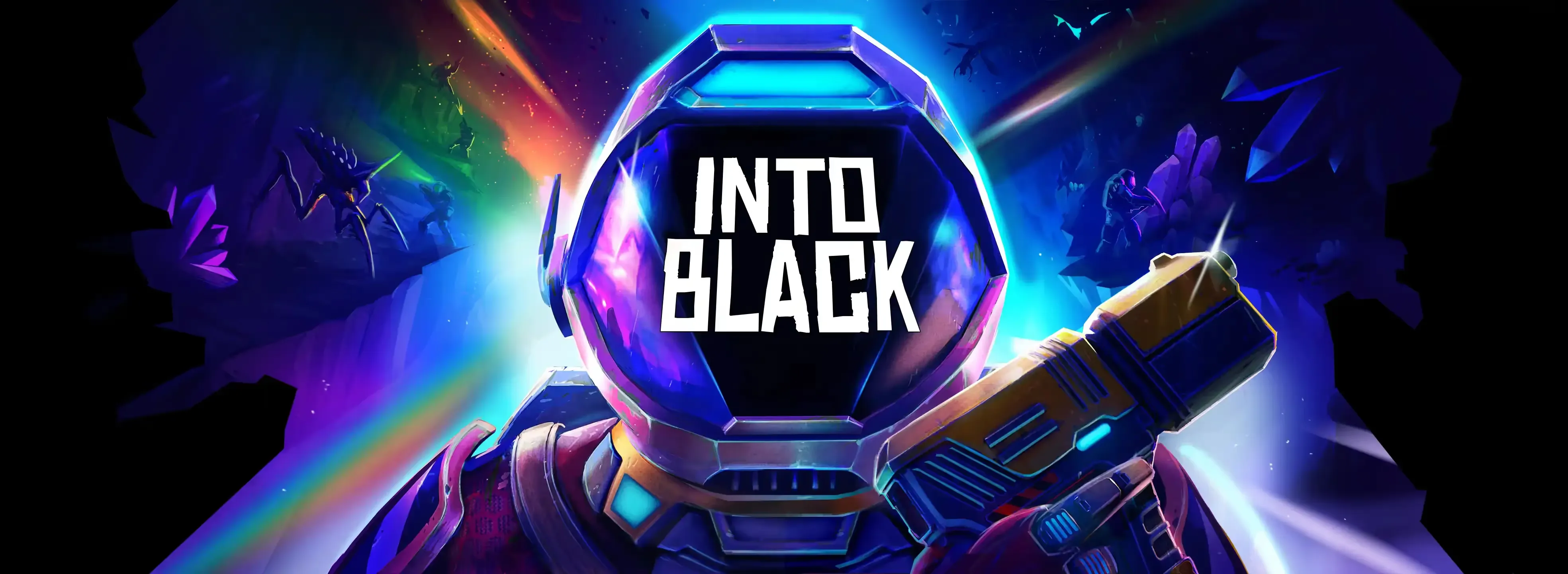
The Binary Mill engaged Actuator Digital to extend Into Black, a first-person action adventure set on a mysterious alien planet, with multiplayer functionality. The game had been designed as a single-player experience, so the goal was to let players join each other’s worlds, explore, gather resources, and fight alien creatures together without compromising the original game.
The Challenge
Into Black already had significant development behind it, with core systems designed around solo play. Adding multiplayer meant adapting those systems while preserving existing features and mechanics. Player movement, enemy AI, resource gathering, combat, and exploration all needed to remain consistent for every player in a session.
Network stability added another layer of complexity. Latency and desynchronisation could quickly undermine the experience, particularly when several players were exploring, fighting, or collecting resources at once. The game also needed to support players joining and leaving sessions without losing progress or corrupting shared state, with capacity for up to 12 concurrent players.
The Solution
Actuator Digital reworked the game’s core code to support netcode, then adapted each major system for multiplayer play:
- Player movement, enemy AI, resource gathering, combat, and exploration were synchronised across clients.
- Enemy spawning, behaviour, and death animations were replicated consistently for every player.
- Resource collection, player death and respawn, and combat interactions were adjusted for shared play.
- Network traffic was optimised to reduce latency and maintain stable performance across multiplayer scenarios.
- Audio and visual feedback was updated so important events were communicated consistently to all players.
- Multiplayer testing, bug fixing, and QA covered varied session conditions and the balance between game systems and network performance.
Session persistence, state restoration, and resource management were handled so players could join or leave without disrupting the rest of the group.
The Outcome
The result was a fully integrated multiplayer mode for Into Black. Players could join each other’s worlds, share resources, fight enemies, and explore together without disrupting the game’s original experience.
The updated systems supported sessions of up to 12 concurrent players with minimal latency and consistent synchronisation. Into Black gained a stable cooperative experience while retaining the mechanics and atmosphere established by its single-player foundation.
Working with The Binary Mill, Actuator Digital expanded Into Black into a multiplayer experience without losing what made the original game work. The project demonstrated how an existing single-player game can be carefully reworked for cooperative play through focused systems engineering, testing, and iteration.